Play Sliding network puzzle (Netslide) online Works — plays right here, unlimited puzzles
Guide updated October 2026 · Runs via WebAssembly (native port)
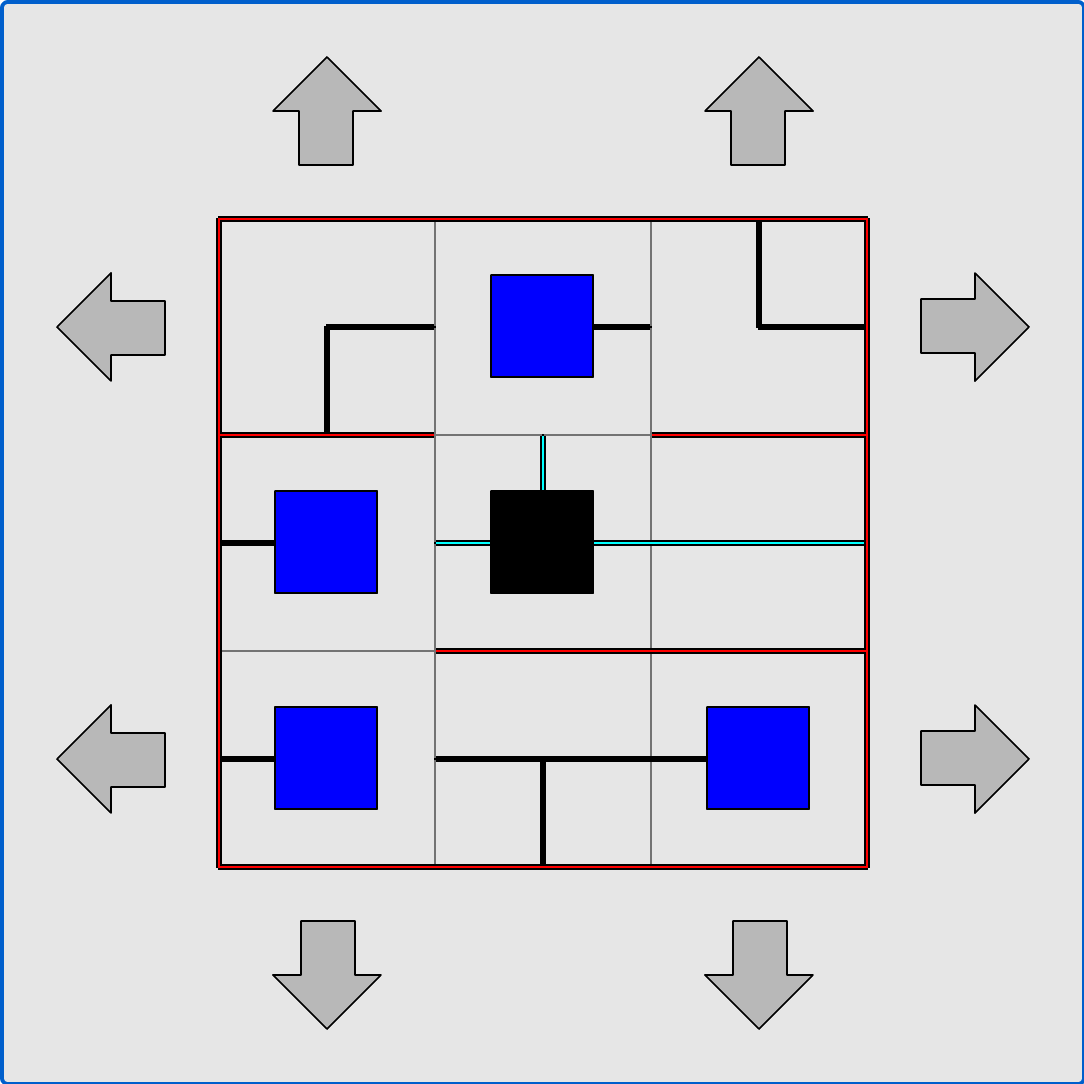
Netslide mixes a network-connection puzzle with sliding rows. The grid holds tiles of wire, and one shuffled layout links them all into a single tree from the centre square. You cannot turn tiles; instead you shift whole rows and columns, wrapping round the edges, until every tile lights up. The puzzle is ready below; click the arrows around the grid to slide.
Controls — what does what
| Action | Keyboard | Mouse / touch |
|---|---|---|
| Shift a row or column | Arrows to move the marker round the edge, Enter | Left-click an arrow |
| Shift it the opposite way | - | Right-click an arrow |
| Undo / redo | U or Ctrl+Z / R or Ctrl+R | Game menu |
| New puzzle | N | Game menu, New game |
FREE This is the complete game, free. Open source under the MIT licence: the complete puzzle, with a new grid every time.
Netslide is from Simon Tatham's Portable Puzzle Collection, © Simon Tatham and contributors, used under the MIT licence. Built from source by scripts/build-puzzles.mjs.
How to play
- Shift rows left or right and columns up or down; a tile pushed off one end comes back at the other.
- Tiles connected to the centre square are lit. Light every tile in the grid.
- The finished network has no loops and no loose ends.
- Wires may not cross the red barrier lines.
Sizes and difficulty
The Type menu offers 3x3, 4x4 and 5x5 grids at easy, medium and hard. Easy grids have more barriers, which act as hints. Hard grids have wrapping walls, so connections can run off one edge and on at the opposite edge. Custom offers the same options as the rotating network puzzle, including barrier probability, plus a limited shuffle as in Sixteen.
Solving tips
Work outwards from the centre: lock in the tiles next to the lit area and only then move on. Barriers are fixed, so use them to work out which tile can go where. Endpoint tiles with a single wire must point back into the network, which narrows the rows they can occupy. Unlike the rotating version, more barriers make it easier, not harder.
Where this puzzle comes from
Netslide is part of Simon Tatham's Portable Puzzle Collection, a set of about forty logic puzzles written by Simon Tatham and contributors and released under the MIT licence. Every grid is generated on the spot, so the supply never runs out, and for the grid-logic puzzles the generator makes sure each has exactly one solution, reachable by reasoning rather than guessing. The version here is the collection's own code compiled to WebAssembly; the Game menu can save a puzzle to a file and load it again, and the Type menu changes the size and difficulty.
Frequently asked questions
How is Netslide different from Net?
In Net you rotate tiles in place. In Netslide the tiles are already the right way round, and you move them into position by sliding whole rows and columns.
Why do hard levels have fewer barriers?
Barriers can never be crossed, so each one tells you something about the answer. Fewer barriers means fewer clues.
Is Netslide free to play here?
Yes, with no limit on the number of puzzles. Netslide is open-source software under the MIT licence, and every grid is generated fresh when you press New game.
Does it work on a phone or tablet?
Yes. A tap works as a click and the puzzle resizes to fit the screen. Puzzles whose controls use the right mouse button are easier with a mouse.
More you can play in your browser

Related guides
- Network tile-rotation puzzle (Net)Play Net free in your browser: rotate scrambled pipe tiles until every square joins one ne
- Sliding row puzzle (Sixteen)Play Sixteen free online: shift whole rows and columns, wrapping tiles round the edges, to
- Pipe PanicLay pipe from a queue you can't reorder and stay ahead of the water.
- Rotating tiles puzzle (Twiddle)Play Twiddle free online: rotate 2x2 blocks of number tiles to sort the grid into order.…
Want a game like this on your own site?
Sliding network puzzle (Netslide) isn't ours to give away — we host it, we didn't write it. But eleven of the games here we did write from scratch, and those are free for anyone to put on their own page: one line of HTML, no account, no permission, no attribution beyond a credit line.